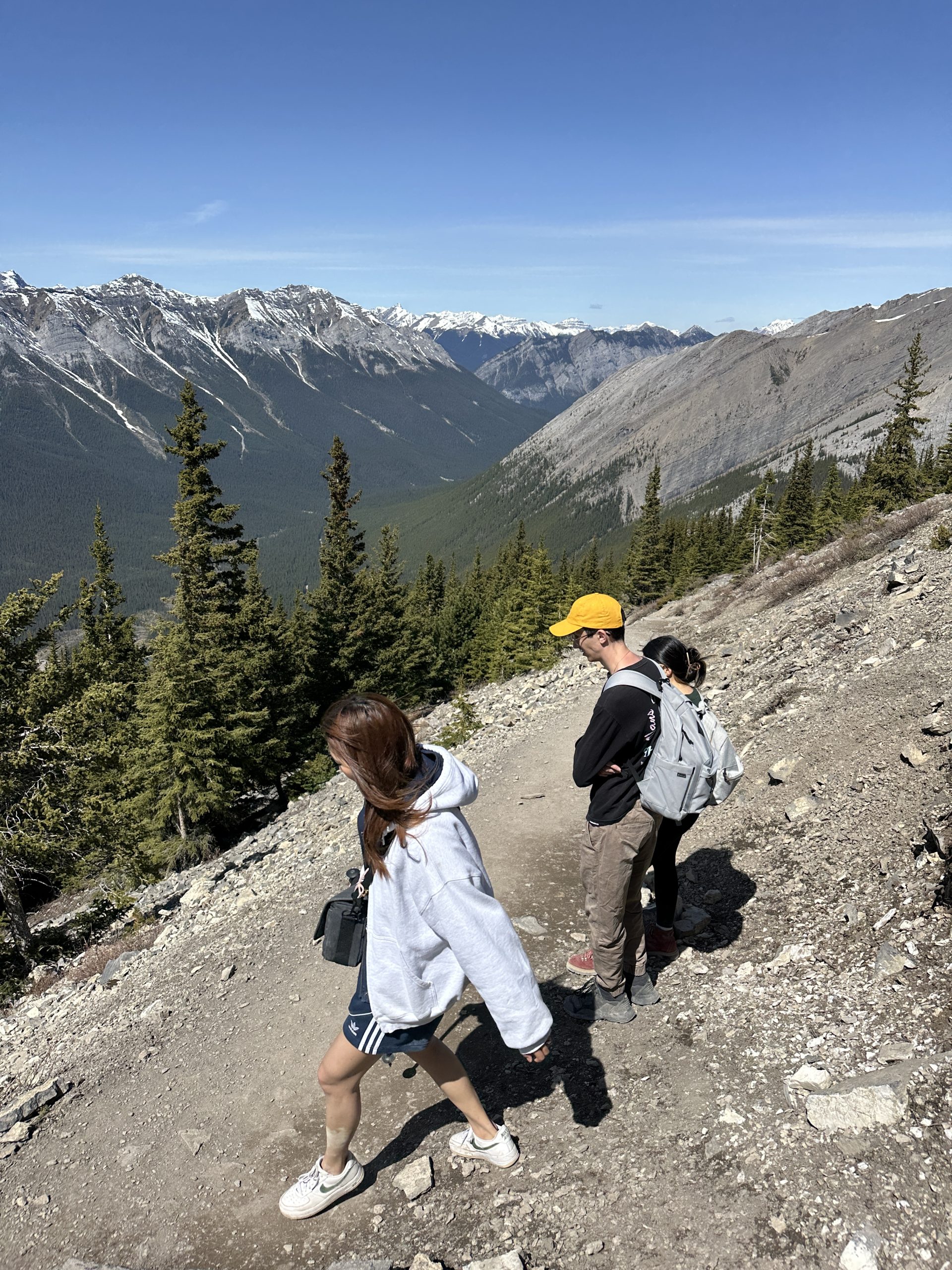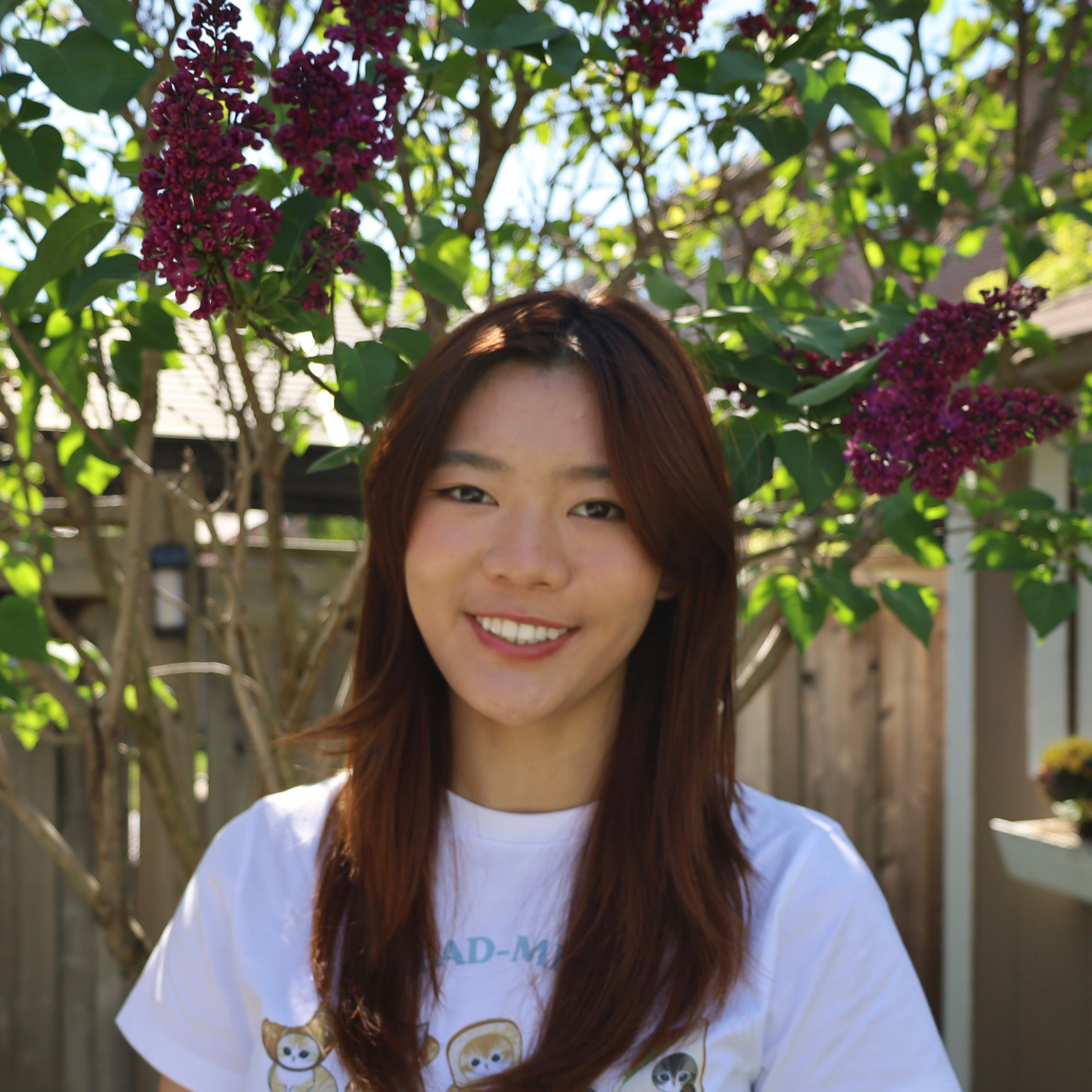
Winnie is going into her 5th year doing an Astronomy and Physics Specialist, Math Minor and Philosophy Minor. She was born in Guangzhou, China and moved to Toronto in grade 3. She learned about dark matter and dark energy on YouTube from Neil deGrasse Tyson, and ever since, she has been obsessed with cosmology. She is so glad to have found radio astronomy as a way to explore it!
What made you decide to participate in SURP?
What is your favourite thing about SURP?
My favourite thing about SURP are the weekly talks that we get to attend. The variety of topics opens my eyes to how much astronomy is connected to other fields, such as archaeology, engineering and LLMs. The Carr Astronomical Observatory field trip was definitely a core memory.
Can you tell us about your research project?
I am upgrading the electronics at the Algonquin Radio Observatory’s (ARO) 46-m radio telescope. During my first research project, I helped upgrade the analog electronics, and now I am working on the F-engine of the telescope. The F-engine of a radio telescope involves analog-to-digital converters, a Field Programmable Gate Array (FPGA) and a readout system. The FPGA is where all the magic happens, you can program it to do whatever you want it to do. In radio astronomy, we want to put the time-stream of voltages through a spectrometer so we know what frequencies the signal is made out of. Then, packetize the data and read it out through the 100GbE port. At the end of August, I will deploy the new F-engine alongside a new computer node to ARO.
Can you explain how SURP has been different from your undergrad work?
During my undergrad, I have noticed that I learn much more in lab courses than in regular courses. SURP is like a lab course on steroids. It is all hands-on learning and the best part is that you get to choose what you want to learn. My time in the UTRAIN Lab has amounted to more learning than probably all of my undergrad courses combined. The best way to learn for me is through conversations with experts (which are all around me in the lab), through mistakes, and applying what I learn to something that will be used to do new science.
What are your plans for the future?
Tell us something fun about yourself unrelated to SURP!