
Menu
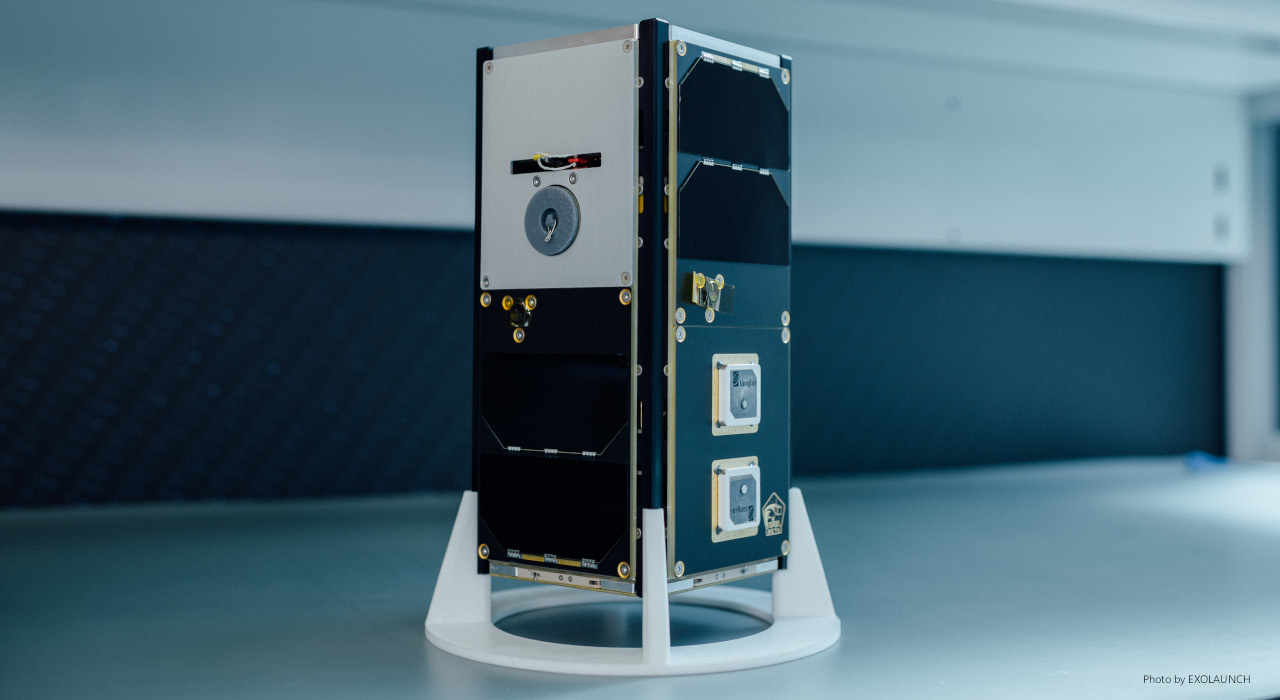
LUVCam: Advancing Ultraviolet Astronomy with Small Satellites
LUVCam (Little UV Camera) is a Dunlap Institute-led program developing compact ultraviolet and visible-light cameras for small satellites. A key goal of the project is to demonstrate how commercial off-the-shelf (COTS) components and detectors can be adapted for use in space, enabling capable astronomical instruments to be developed more rapidly and at substantially lower cost than traditional space instrumentation.
The first-generation LUVCam1, integrated into the GRBBeta cubesat, has successfully demonstrated stellar imaging from orbit, providing valuable experience in operating and characterizing COTS-based ultraviolet-sensitive detectors in the space environment. Building on this success, LUVCam2 is being developed as a more capable science instrument for the upcoming BRNOSat CubeSat mission. It will enable ultraviolet observations of variable and transient sources, including energetic flares from nearby stars.
Through LUVCam, Dunlap researchers are developing and testing compact optical systems, detectors, electronics, and data-processing techniques using a rapid, iterative approach to space instrumentation. The program also serves as a technology pathfinder for future ultraviolet missions, including Dunlap’s contributions to QUVIK, a planned space telescope designed to study kilonovae and other rapidly changing phenomena in the ultraviolet.